

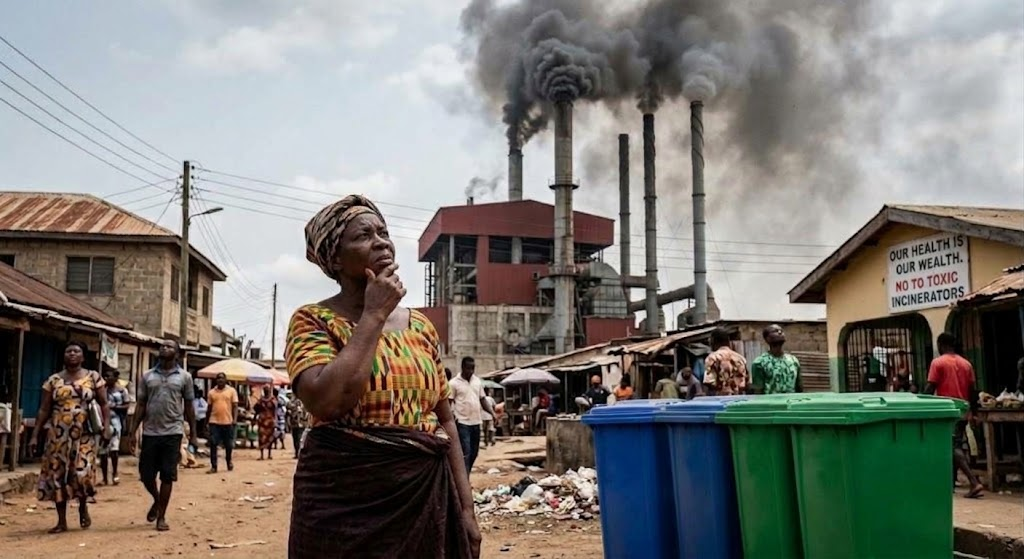
A new report by the Global Alliance for Incinerator Alternatives (GAIA) warns that African cities are being misled toward waste‑to‑energy incineration, a costly and polluting path that threatens public health and municipal budgets.
Released under the title “Africa’s Waste Crisis Is Attracting the Wrong Solution: Waste‑To‑Energy Incineration,” the study examines 15 incineration projects and proposals across 10 countries, including Ghana.
GAIA emphasised that incineration is a mismatch for local waste streams and is financially risky and harmful to recycling economies, locking municipalities into decades of high‑pollution infrastructure.
The report further stressed that as urban centres across Africa grapple with mounting waste management pressures, the report argues that incineration diverts scarce funds from cheaper, job‑rich zero‑waste systems that could deliver both environmental and economic benefits.
The Scale of the Incineration Push
The report tracked 15 waste-to-energy incineration projects or proposals across 10 countries: Ghana, Egypt, Ethiopia, Kenya, Morocco, Nigeria, Sierra Leone, South Africa, Uganda and Zimbabwe.
One plant, Reppie in Ethiopia, is operational, while two are under construction and the other 12 are at the stage of seeking approval, securing financing, planning or proposing.
These projects account for an estimated cumulative power capacity of 520–550 megawatts (MW) and total capital expenditure exceeding US$4 billion.
Funding Sources Are Also a Concern.
The largest source is African public money, while foreign funding comes primarily from China – involved in five projects, typically as contractors, with financing arranged through Chinese banks and the Netherlands – Dutch public development finance bodies support projects in Lagos, Johannesburg and Freetown.
The report highlights a case study in Harare, Zimbabwe, where a 30-year concession worth US$300–350 million was granted without competitive bidding or an independent feasibility study, and the city now pays a private company US$22,000–40,000 per day to dispose of waste at a site it owns, an arrangement the mayor called “atrocious” and “corruption which has drunk an energy drink or taken Viagra.”
A Continent-Wide Waste Emergency
The key findings revealed that across Africa, rapid urbanisation and population growth are overwhelming waste collection systems.
It highlighted that only 55 percent of municipal solid waste on the continent is collected and a mere four percent is recycled.
Open dumping and burning remain widespread and landfill disasters have killed dozens. Over 116 people died at the Koshe landfill in Addis Ababa, 30 at the Conakry landfill in Guinea and 21 at the Kiteezi landfill in Kampala.
In response, municipalities are increasingly being offered waste-to-energy incineration as a ‘silver-bullet’ solution that promises to manage waste and generate electricity.
However, the report finds that incineration is misaligned with Africa’s waste composition. In many African cities, municipal waste is predominantly organic, highly moisture-laden and low in calorific value.
Over 62.5 percent of solid waste generated in East Africa is organic and low-income countries produce 53–56 percent food and organic waste, compared with about 32 percent in high-income countries.
This high-moisture waste burns poorly and would often require supplementary fossil fuels to combust, making incineration highly inefficient and expensive.
The United Nations (UN) Environment Programme has similarly found incineration unsuitable for low‑ and middle‑income countries.
GAIA’s report underscores that incinerators create long‑term financial lock‑in: facilities cost hundreds of millions to build, take 20–30 years to pay off and require a constant stream of high‑calorific waste, locking cities into policies that undermine recycling, composting and waste reduction.
Incineration does not eliminate waste. Instead, it releases pollutants such as nitrogen oxides, heavy metals and persistent organic compounds like dioxins and furans, while leaving behind toxic ash that demands secure disposal.
Even advanced pollution controls cannot fully prevent emissions and GAIA notes incinerators emit more greenhouse gases than coal plants.
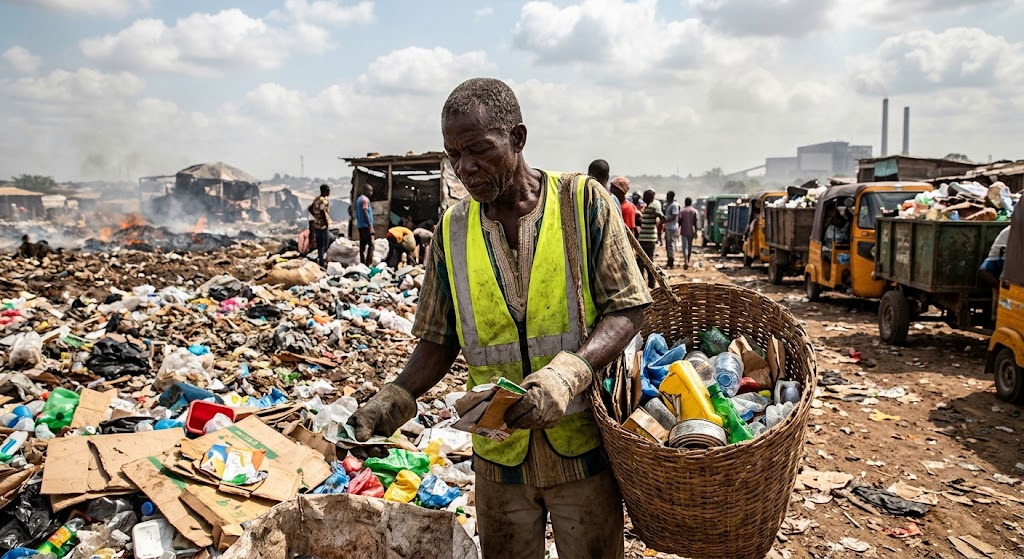
The report also warns of threats to waste pickers and recycling economies. Incinerators consume plastics, paper and cardboard, the very materials informal recyclers depend on.
At Addis Ababa’s Koshe dumpsite, interviews revealed a 50 percent drop in earnings after the Reppie incinerator opened, pushing some workers into street begging.
The hundreds of millions spent on a single incinerator could instead fund source‑separated collection, composting networks, material recovery facilities, reuse systems and formal integration of waste pickers, all at lower long‑term cost and without pollution or lock‑in.
“The actual choice is not between incineration and dumping, but between incineration and investing in a comprehensive zero‑waste system.”
Ghana’s Risk in the Incineration Debate
Ghana is singled out in the GAIA report as one of 10 African countries pursuing waste‑to‑energy incineration projects.
While the study does not provide detailed figures on Ghana’s waste composition or project capacity, its inclusion signals the country’s exposure to the continent‑wide trend of locking into costly, polluting infrastructure.
The report cites a 2016 study on municipal solid waste in Ghana, which found significant recyclable and organic fractions better suited to zero‑waste strategies than combustion.
GAIA argues that Ghana should prioritise mandatory source separation, composting, black soldier fly farming, recycling infrastructure and formal integration of waste pickers, rather than incineration.
If Ghana proceeds, the report warns, it risks repeating mistakes already evident in the global north, where incinerators are being phased out due to climate, health and environmental impacts.
“Africa does not need to follow the same polluting infrastructure pathways as industrialised countries; it can learn from their mistakes and adopt zero‑waste solutions that are free of toxins and truly circular,” the report stressed.
Local Logistics Industry as Both Enabler and Casualty of Waste-to-Energy Incineration
The GAIA report on Africa’s incineration push, while framed as an environmental and public health warning, carries profound implications for the local logistics industry.
The report notes that only 55 percent of municipal solid waste on the continent is collected, with a mere four percent recycled. This collection gap is fundamentally a logistics problem -insufficient trucks, route networks, transfer stations and last-mile infrastructure.

Yet instead of investing in decentralised, labour-intensive collection logistics that would create local jobs, municipalities are being steered toward capital-intensive incinerators that require a constant stream of waste to remain financially viable.
In Ghana, where municipal solid waste is collected at inadequate rates and contains over 50 percent high-moisture organic material, pursuing zero-waste systems instead of incineration has structural implications for local logistics service providers (LSPs).
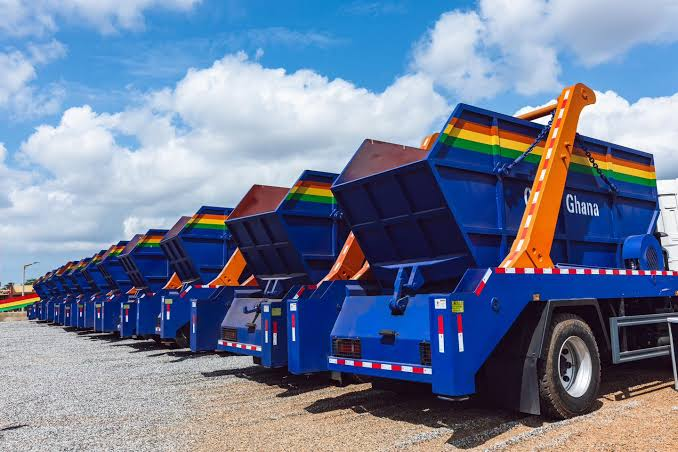
Centralised incinerators require massive, heavy-duty waste fleets to haul raw, unsorted garbage over long distances, contributing to urban road congestion, high fuel burn and rapid vehicle wear.
Local Logistics Impact
A decentralised zero-waste system which includes composting and local recycling empowers local informal and formal logistics networks.
Tricycle operators, popularly referred to as ‘aboboyaa’, motorised haulers and neighbourhood collection crews act as the critical first-mile supply chain, feeding community-level composting and material recovery centres (MRFs) without requiring long-distance freight trips.
Ghana produces a large amount of organic waste and turning this waste into compost fertilizer or feed transforms waste management into a useful agro-logistics system. Local transport operators benefit by moving compost and protein-rich feed from city waste facilities to rural farms and poultry producers.
GAIA recommends that Ghana adopt a zero-waste approach built on mandatory source separation, composting, recycling infrastructure and the formal inclusion of waste pickers. These measures depend on strong logistics systems, collection routes, transfer points, processing facilities and distribution networks for compost and recovered materials.
The report stresses that this is not only an environmental choice but also an economic one. Incineration centralises waste logistics in a single contracted facility, while zero-waste strategies spread logistics work across cooperatives, compost producers, recyclers and waste-picker networks.
This broader distribution creates more resilient local jobs and strengthens Ghana’s logistics industry.
Recommendations
The GAIA report urges national governments to impose a moratorium on new incineration agreements until independent assessments are conducted with full civil‑society participation.
Regulators are advised to mandate public disclosure of financing arrangements, feedstock contracts, and environmental impact assessments before approving any project.
Protecting waste pickers is highlighted as a priority. The report calls for their formal integration into waste systems before authorising infrastructure that could disrupt recyclable material flows. Without such safeguards, thousands of livelihoods risk being undermined.
On financing, GAIA recommends that national treasuries, the African Development Bank (AfDB), and development finance institutions redirect resources toward zero‑waste solutions.
These include waste prevention, source‑separated collection, composting, black soldier fly farming and recycling, measures aligned with the African Union’s (AU) Agenda 2063 target of achieving 50 percent municipal waste recycling.
Finally, the report stresses that global climate finance institutions should categorically exclude waste incineration from climate mitigation portfolios. Echoing the EU’s Renewable Energy Directive, GAIA argues that incinerators must not be eligible for subsidies or climate finance, as they exacerbate pollution and greenhouse gas emissions rather than reduce them.