

Once the backbone of Ghana’s export economy, the nation’s railway system has endured six decades of neglect, shrinking from a thriving 947-kilometre network in 1960 to just 160 kilometres of operational track today, a World Bank report has revealed.
The report highlighted that a freight-led revitalisation strategy now seeks to reverse this decline, positioning rail as a critical lever for economic transformation, trade competitiveness and climate resilience.
Historical Decline
The 10th World Bank ‘Ghana Economic Update’ (GEU) report, published in August 2026, titled “Reset for Growth: Sustaining Macroeconomic Recovery and Unlocking Transport for Economic Transformation”, indicated that in 1960, Ghana’s railway system stood at its functional zenith.
The network operated 947 kilometres of track, provided reliable rail access to nearly 30 percent of the population and anchored the country’s cocoa and mineral value chains.
It was a primary conduit for bulk exports and a foundational driver of spatial inclusivity, connecting production zones to ports and shaping the geography of economic opportunity.
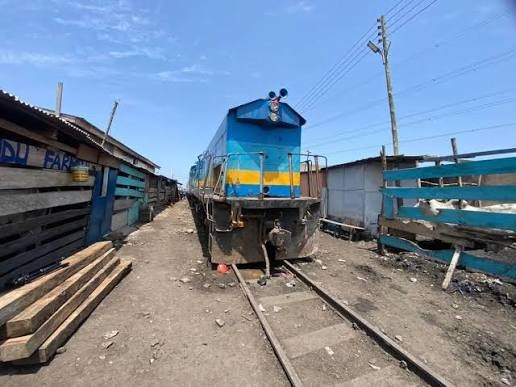
That benchmark now serves as a stark reminder of how far the system has fallen.
Over the six decades that followed, inconsistent political commitment and the failure of legacy interventions, most notably the donor-funded Transport Recovery Programme, Phase II (TRP‑2) and subsequent aborted private concessions, led to a near-total erosion of the railway asset base.
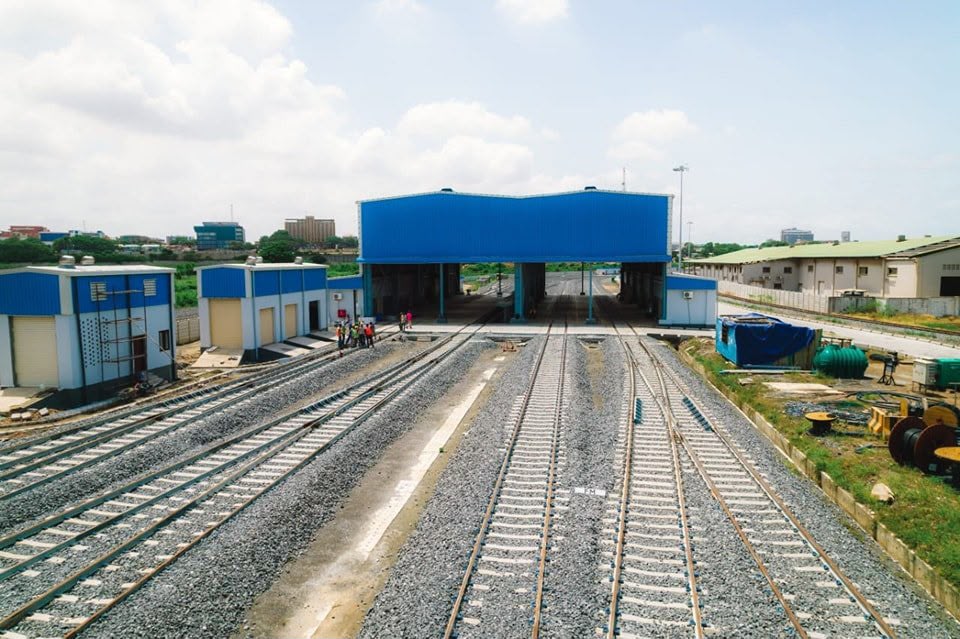
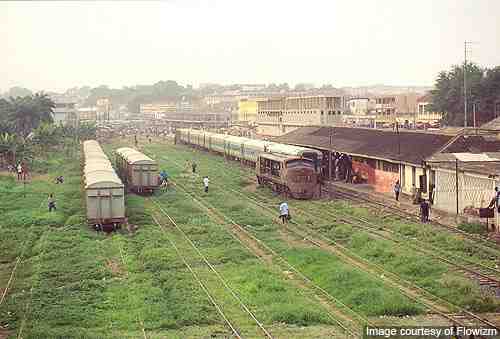
According to the report, by 2020, the network had contracted to a mere 160 kilometres of operational track.
Reliable access had collapsed to 0.6 percent of the population from 29.6 percent in 1960, leaving 99.4 percent of Ghanaians disconnected from rail as a viable transport mode.
The system’s effectiveness rating fell well below the critical failure threshold of 20 percent, turning the legacy narrow-gauge network into a marginal and decaying relic of the national transport mix.
The comparison is brutal: total operational track length fell from 947 kilometres to 160 kilometres, population access dropped from 29.6 percent to 0.6 percent, and the system moved from high functionality to critical failure.
Maintenance Financing
The World Bank added that the collapse of the rail sector is symptomatic of a broader structural paradox within Ghana’s transport governance. Even as the sector recorded high real growth of 8.7 percent in 2025, it remains a binding constraint on economic transformation because of institutional fragmentation and chronic underfunding.
At the heart of this crisis is maintenance financing. Despite the legal framework provided by the Road Maintenance Trust Fund Act of 2025, the sector remains trapped in a cycle of inadequate funding.
Only 58 percent of road user charge accruals are transferred to maintenance, while maintenance arrears have ballooned to more than GH₵8 billion.
Because road repairs take most of the funding, rail is starved of resources and left to decay beyond repair.
The consequences are not confined to the railway itself. The disappearance of rail capacity on the western corridor has forced bankable commodity volumes, especially manganese and bauxite, onto the road network.
Urban Congestion Crisis
According to the GEU, inefficiencies in urban mobility, specifically in the Greater Accra Area, impose a massive productivity drag.
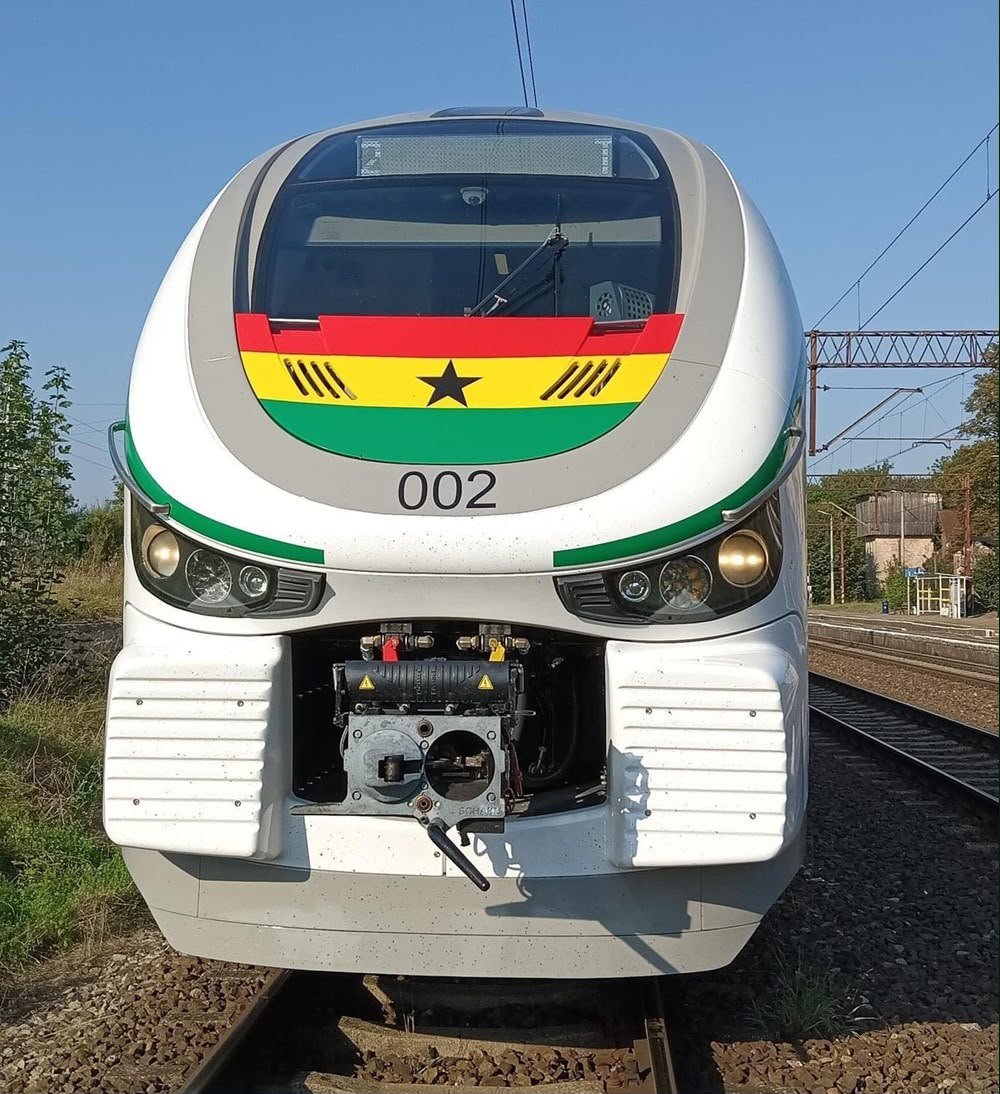
The annual cost of urban congestion is estimated at GH₵4.5 billion, equivalent to US$1 billion plus, approximately one percent of GDP.
This is driven by extreme delays; peak-hour speed profiles on key Accra corridors have fallen to sub-10 km/h, effectively walking speed, stifling the movement of labour and goods.
Road Death Tolls and Hotspots
Deaths from motorcycles and tricycles have risen sharply, climbing from just 2.7 percent of all road fatalities in 2001 to 34 percent by 2021. This shows how quickly these vehicles have become a major safety concern.
The danger is also concentrated in specific areas. Most crashes happen on a very small share of roads, just 2.65 percent of urban routes and 4.37 percent of rural ones, making these hotspots clear targets for safety improvements and engineering fixes.
Road Traffic Injuries Cost More Than Half Education Budget Allocation
The collapse of rail is not just a transport inconvenience, it is an economic burden with far‑reaching consequences.
With bulk freight diverted onto roads, national logistics costs rise by at least US$1 per ton, a hidden surcharge that firms have already absorbed into their operations.
Even more alarming is the human and fiscal toll of road congestion. Traffic injuries drain approximately US$4.55 billion, which is 2.1 percent of Ghana’s gross domestic product (GDP) every year, a figure that astonishingly surpasses more than 50 percent of the nation’s entire education budget.
In February 2025, Education Minister Haruna Iddrisu, speaking at an education forum, revealed that there are about 5,000 schools under trees in Ghana, which he described as an “infrastructure deficit” in the country’s education aspirations.
However, to some Civil Society Organisations (CSOs) such as Star Ghana, African Education Watch (Eduwatch) and Action Aid, there are over 5,400 schools under trees, sheds and dilapidated structures across Ghana, especially in rural areas, which they described as unacceptable.
This high injury cost is a resource that could go into funding educational projects to eliminate some of these schools under trees.
This harsh imbalance underscores how the failure of rail has become a structural drag on competitiveness, leaving businesses and citizens alike to pay the price.
Policy Shift
To reverse this decline, the current policy shift moves away from generic restoration toward a targeted, freight-led strategy.
This approach prioritises bankable commodity volumes to ensure commercial sustainability and attract private capital.
On the western corridor, modernisation is being prioritised to capture high-volume mineral traffic, specifically manganese and bauxite moving to the Port of Takoradi. This corridor remains the most viable contender for large-scale private participation.
On the eastern corridor, the focus is on agricultural value chains, primarily cocoa moving to the Port of Tema. By transitioning cocoa from road to rail, the state aims to reduce transit times and mitigate the logistics premiums currently burdening COCOBOD.
Operationalising Logistics as Backbone for Coastal Port Congestion
The Boankra Inland Container Depot is positioned as a central hub for transit cargo, essential for serving landlocked neighbours and reducing pressure on coastal infrastructure.
The Mpakadan Dry Port is a critical multimodal link facilitating trade via the Volta Lake, connecting the northern hinterlands to southern maritime gateways.
Keta Port is being developed as a strategic asset for the African Continental Free Trade Area (AfCFTA), with embedded hinterland connectivity intended to ensure it functions as a regional trade gateway.
Revitalisation depends on the operationalisation and linking of these logistics backbones capable of solving coastal port congestion.
The Railway Master Plan 2026
The sector’s revival is anchored in the Railway Master Plan 2026, which seeks to modernise the network as a counter-narrative to the expenditure compression that has historically limited public investment.
To avoid the failures of past concessions, new public-private partnerships (PPPs) must adhere to a strict bankability framework.
Concessions should only be sought for corridors with guaranteed mineral or agricultural freight. Mandatory requirements for long-term maintenance must be embedded in all contracts to prevent the return of infrastructure decay.
Risks must be shared equitably between the state and private partners, with clear key performance indicators for service reliability.
Need for National Transport Sector Strategy: 6 Priority Pillars
Transformation requires a national transport sector strategy jointly owned by the Ministry of Transport and the Ministry of Roads and Highways, organised around six priority pillars.
The first is maintenance sustainability, which means fully operationalising the Road Maintenance Trust Fund Act, 2025 (Act 1147) and increasing user charge transfers from 58 percent to 80 percent.
The second is agency coordination, establishing a unified framework for investment across all transport modes.
The third is freight-led rail, prioritising the western and eastern corridors and inland hubs. The fourth is targeted road safety, treating safety as a macroeconomic priority to reduce the 2.1 percent GDP loss.
The fifth is climate resilience, mandating climate-proofed designs for all new infrastructure.
The sixth is a digital backbone, scaling port digitalisation through the integrated customs management system (ICUMS), the single window, and the truck appointment system to inland terminals.
Big Push Infrastructure Programme
The World Bank maintained that Ghana has reached an inflection point where expenditure compression, achieved by under-executing the 2025 capital budget by 38 percent, is no longer a viable path to stability.
The US$2.2 billion ‘Big Push’ infrastructure programme represents a necessary pivot toward high-return public investment.
The Ghana Market Access and Connectivity Project (GMACP) is designed to fix poor feeder roads in farming areas where poverty is high. By making it easier for rural communities to reach markets, the programme aims to move farmers from small‑scale subsistence to more profitable agro‑processing.
The report shows that building rail and road projects with climate‑resilient designs is the smarter financial choice for Ghana.
While these designs cost about 15-20 percent more upfront than standard ones, they save 30-40 percent over a 20-year period.
Most importantly, they protect nearly 74,000 kilometers of feeder roads from seasonal flooding, keeping communities connected and reducing costly disruptions.
The Digitisation of Logistics
The digitisation of logistics is equally important. Scaling the successful digitalisation of Tema Port, including ICUMS and the truck appointment system, to inland terminals such as Boankra is essential.
Digital integration is projected to reduce trade costs by 2.2 percent to 2.8 percent. For Ghanaian firms, this margin is often the decisive factor in achieving viable participation in export value chains and the broader AfCFTA market.
From the 1960 baseline of 947 kilometres and near 30 percent access to the 2020 lowest level of 160 kilometres and 0.6 percent access, Ghana’s railway story has been one of historic decline. The emerging freight-led strategy, backed by climate-proofed investment, digital logistics and disciplined PPP, is now positioned as the country’s best route to reversing that trajectory.
Conclusion
Ghana’s railways stand at a crossroads. From their historical decline to today’s freight-led revival, the sector embodies both the failures of past governance and the promise of future transformation.
If the current strategy succeeds, rail could once again become the backbone of Ghana’s economy, reducing logistics costs, easing road congestion and unlocking regional trade under AfCFTA.