


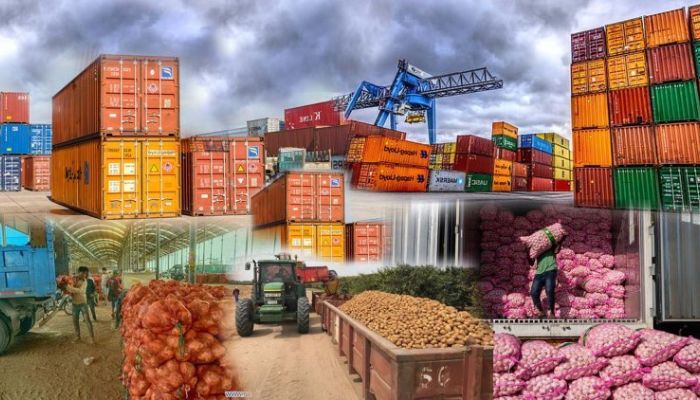
When a farmer harvests mangoes, pineapples, vegetables, cashews or other agricultural products, the journey to the international market is only just beginning. Between the farm and a customer thousands of kilometres away is a chain of activities involving packaging, quality control, documentation, transportation, customs procedures, freight forwarding and international shipping.
For agricultural exporters, logistics is far more than the physical movement of goods. It is a critical enabler of Ghanaian products reaching and competing in international markets.
The Ghana Export Promotion Authority (GEPA) highlights agribusiness as a key driver of non-traditional exports. According to its latest figures, these exports generated US$5.01 billion in 2025, up from US$3.83 billion in 2024, a sharp rise that underscores the sector’s growing importance.
The figures highlight a part of Ghana’s international trade that extends beyond the country’s better-known exports such as gold, crude oil and cocoa.
The Journey Starts Long Before The Port
For an agricultural exporter, the export process begins well before a truck arrives at the port. The exporter must first have a product that meets the intended market’s requirements. These can include requirements for quality, packaging, labelling, food safety, documentation and other standards.
The Ghana Standards Authority (GSA) is responsible for standards, testing, inspection and conformity assessment activities in Ghana. Its mandate includes helping to ensure that products imported into the country or exported from Ghana meet applicable requirements.
This makes quality control an important part of the export chain. For an exporter, producing a good product is therefore only one part of the job. The product must also be prepared properly for the market it is entering.
Why Packaging Matters
Imagine a farmer who has produced high-quality mangoes for an overseas buyer. The mangoes may be fresh and acceptable at the farm gate.
However, they still have to survive transportation, handling, storage and the journey to the destination market. Packaging therefore becomes an important part of the logistics process.
The exporter has to consider factors such as the type of packaging, product protection, labelling and the conditions under which the product will be transported. Poor handling at any point in the supply chain can affect the quality of the final product.
For perishable agricultural goods, the importance of timing becomes even greater. A delay that may be manageable for a shipment of machinery can have a much more serious effect on fresh produce.
The Role of The Freight Forwarder
This is where freight forwarding becomes particularly important. The exporter may understand farming and production very well but may not have specialist knowledge of international shipping, customs procedures and documentation.
A freight forwarder can help coordinate the movement of the goods through the logistics chain. The work can involve documentation, customs processes, shipping arrangements and coordination with other parties involved in the movement of the cargo.
The Ghana Revenue Authority requires exporters to follow customs procedures and submit the appropriate documentation through the customs system. GRA’s published guidance states that export declarations are passed through the ICUMS platform, with supporting documents such as bills of lading or airway bills, invoices and packing lists.
For a small exporter, having someone who understands these procedures can make the export process easier to navigate.
Customs is Part of The Export Journey
The Ghana Revenue Authority’s Customs Division plays an important role in facilitating and controlling international trade. GRA states that exporters must pass a customs declaration through the Integrated Customs Management System (ICUMS) and obtain the relevant documentation and approvals required for their goods.
ICUMS was introduced in 2020 as Ghana’s electronic customs system and operates as a single-window platform for cross-border trade activities. According to GRA, the system was designed to coordinate trade processes, reduce costs for stakeholders and improve revenue mobilisation. For exporters, this means that understanding digital customs processes is increasingly part of doing business internationally.
Not Every Export Follows The Same Process
Another important point is that Ghana’s exports are not all treated in exactly the same way. The requirements can vary according to the product and destination.
For example, certain agricultural and food products may require specific certificates or inspections. GRA’s guidance for exporters identifies certificates and permits issued by relevant institutions depending on the product.
Examples include Ghana Standards Authority certification for certain products and certification from other specialised institutions where applicable. This means an exporter cannot simply assume that the documentation used for one product will automatically apply to another. Understanding the requirements before shipping is therefore important.
From Ghanaian Farms to International Shelves
The potential for agricultural exports extends across several sectors. GEPA’s export information covers areas including agribusiness, fisheries, cocoa, roots and tubers, beauty and cosmetics, wood processing and industrial products.
This demonstrates that Ghana’s export story is broader than a single commodity. Mangoes, cashew, processed agricultural products and other non-traditional exports can connect Ghanaian producers to international consumers.
GEPA’s published market information, for example, tracks Ghanaian products such as mangoes and cashew across international markets.
For farmers and processors, accessing these markets can create opportunities to earn foreign exchange and expand their businesses. But access to a market does not automatically guarantee success.
The exporter must still meet the buyer’s requirements and deliver the product in the expected condition and within the agreed arrangements. The small exporter faces a different reality Large companies may have dedicated logistics, export and compliance departments.
A small agricultural processor may have only a few employees. The owner may be responsible for production, marketing, finance and export coordination at the same time, and this can make international trade more challenging.
A small exporter who does not understand documentation requirements may experience delays. One who does not properly calculate transportation and other export-related costs may underestimate the amount required to fulfill an order. This is why access to reliable information and professional support is important for small and medium-sized exporters.
Ghana’s Trade Numbers Show Why Exports Matter
The wider trade figures provide context. According to the Ghana Statistical Service, Ghana’s total exports in 2024 were valued at GH¢294.9 billion, while imports stood at GH¢250.2 billion.
The resulting trade surplus was GH¢44.7 billion, compared with GH¢5.3 billion in 2023. GSS also notes that Ghana’s exports remain concentrated in major commodities, particularly gold, crude oil and cocoa and cocoa products.
This makes the development of other export sectors an important part of the country’s broader trade story. GEPA’s latest non-traditional export figures provide one indication of activity outside the traditional export categories.
The Port is Only One Link in The Chain
It is easy to think of exports as a port activity because containers eventually arrive at Tema or Takoradi before being loaded onto vessels. But the export chain starts much earlier. It begins with production.
Then comes processing, quality control, packaging, storage and inland transportation. Documentation and regulatory processes follow. The cargo then reaches the port, where customs and other procedures are completed before the shipment is loaded for its international journey.
This means that weaknesses in one part of the chain can affect the entire transaction. An exporter may produce an excellent product but still face problems if transportation, documentation, packaging or regulatory requirements are not properly managed.
What Freight Forwarding Means for Agriculture
For the agricultural sector, freight forwarding is therefore closely connected to market access.
A farmer does not necessarily need to become a customs expert or shipping specialist.
However, understanding the basic export chain can help producers make better decisions.
They need to know what their buyers require, which documents apply to their products, what standards must be met and how the goods will reach the destination market.
Professional freight and logistics support can then help connect those requirements to the practical movement of the cargo.
Looking Beyond Raw Exports
Another issue facing Ghana’s export sector is the question of value addition.
Instead of exporting only raw agricultural products, Ghanaian businesses can also participate in processing, packaging and other stages of production.
GEPA describes non-traditional exports as covering areas including agribusiness, manufactures, industrial art and craft and trade in services.
This broadens the export conversation. It is not only about how much Ghana produces.
It is also about what Ghanaian businesses can process, package, certify and successfully sell to customers outside the country.
The Road Ahead
For Ghana’s agricultural exports to reach more international markets, the entire supply chain matters.
Farmers need reliable production systems.
Processors need quality and appropriate packaging.
Exporters need market information. Regulators need effective systems.
Freight forwarders need to understand changing international trade requirements.
Transport and logistics providers need to move goods efficiently.
And buyers need confidence that products arriving from Ghana meet the agreed requirements.
The export journey is therefore a collective process.