


For many Ghanaians, buying a vehicle from abroad can appear straightforward.
A buyer finds a car online, agrees on a price with a seller, makes payment and arranges for the vehicle to be shipped to Ghana. The difficult part may begin when the vehicle arrives.
Before an imported car can move from the port into the hands of its owner, there are customs procedures, documentation, taxes and other charges to consider. For first-time importers, misunderstanding these requirements can turn what appeared to be a good bargain into an expensive transaction.
The Ghana Revenue Authority (GRA) says vehicle importation involves purchasing, shipping and clearing the vehicle after it arrives in Ghana. It also advises importers to keep all relevant documentation to facilitate clearance.
For anyone considering importing a vehicle, understanding what happens between the overseas purchase and the Ghanaian road is therefore important.
Process
The import process starts before the vehicle is loaded onto a vessel.
GRA’s vehicle-importation guidance indicates that information such as the vehicle identification number or chassis number, model, year and make can be used to check the likely duty payable through the Integrated Customs Management System (ICUMS).
This is important because the price paid to the overseas seller is not necessarily the final cost to the buyer.
There can be shipping costs, insurance, customs duties, taxes, port and terminal charges, clearing-agent fees and other costs associated with bringing the vehicle into Ghana.
A buyer who considers only the purchase price may therefore underestimate the amount needed to put the vehicle on the road.
Documents
When the vehicle arrives, documentation becomes central to the clearance process.
According to GRA, relevant documents for vehicle clearing include the Bill of Lading or waybill and the vehicle’s title.
These documents provide important information about the shipment and ownership of the vehicle.
For importers, keeping original and accurate documentation is therefore not simply an administrative requirement. Missing or incorrect documents can create difficulties during the clearance process.
This is one reason freight forwarding and customs-clearing services have become an important part of Ghana’s vehicle-import trade.
How vehicle duty is calculated
One of the biggest questions for a prospective importer is usually simple:
How much will I pay in duty?
The answer is not the same for every vehicle.
GRA explains that vehicle duty calculations use the manufacturer’s first purchase price, with depreciation based on the age of the vehicle. The resulting value is then used in determining the Free on Board value before the applicable exchange rate, freight and insurance are considered.
The applicable duty also varies according to the vehicle.
For example, GRA’s current published schedule lists different rates according to vehicle type, engine capacity and other classifications. Its schedule shows motor cars in certain categories attracting import-duty rates of 5%, 10% or 20%, depending on the applicable specifications.
This is why two vehicles that look similar in an online advertisement can have different customs liabilities.
The cost does not end with import duty. Import duty is only one component of the total amount an importer may have to pay.
GRA’s published vehicle schedule includes taxes and levies such as VAT, NHIL, GETFund Levy, African Union Levy, ECOWAS Levy and other applicable charges. It also identifies examination and processing fees in the relevant categories.
There can also be third-party charges.
GRA lists examples including local shipping-line charges, terminal handling charges, safe-bond terminal handling charges where applicable, trade-number-plate charges and clearing-agent charges.
Prospective buyers are to calculate the total landed cost before buying the vehicle.
ICUMS
Much of Ghana’s customs process now operates digitally through the Integrated Customs Management System, commonly known as ICUMS.
ICUMS was introduced in June 2020 as an electronic customs system and a single window for coordinating cross-border trade activities. The system was designed to streamline processes, reduce costs to stakeholders and improve revenue mobilisation.
The system provides facilities including a used-vehicle duty calculator.
This gives importers an opportunity to obtain an indication of the duty before making decisions about clearing a vehicle.
However, GRA cautions that its online tax calculators are guidelines and that actual tax liabilities depend on the applicable laws and individual circumstances.
For a person about to spend significant money on a vehicle, that distinction matters.
Clearing Agents
A vehicle importer does not necessarily have to rely on an agent.
GRA states It is possible to clear a vehicle at the port without the assistance of an agent. However, to do this, one needs to register with the Customs Division of GRA as a Clearing Agent.
The individual needs to put in the request in writing or apply to electronically, to the Commissioner – General, to be a Clearing Agent.
Secondly, the individual needs to go through all the necessary processes put in place by the Authority before approval of his/her eligibility would be granted.
For many ordinary importers, however, working with a professional clearing agent can provide assistance with customs procedures and documentation.
The important issue is that the importer should understand what the agent is doing and what each payment covers.
Clear communication between the importer and the agent can help reduce misunderstandings over charges and responsibilities.
Why the vehicle’s age matters
Age is another factor that can affect the cost of an imported vehicle.
GRA’s vehicle-duty guidance incorporates depreciation according to the age of the vehicle. The authority also applies overage penalties to certain categories of used vehicles.
There are exceptions under the published rules, including agricultural or farm tractors and certain special-purpose vehicles.
This makes it important for buyers of used vehicles to check the applicable rules before completing a purchase.
A vehicle that looks affordable on an overseas auction or dealership website may have a different overall cost once Ghana’s applicable customs requirements are considered.
Right-hand steering vehicles
Vehicle importation also has rules that some buyers may not be aware of.
“Per Customs laws, right-hand steering vehicles are not allowed into the country but there is a policy dispensation allowing for some consideration upon importer application, a right only the Minister of Trade reserves.”
Where such a vehicle is allowed under the applicable process, GRA says Customs ensures that it is dismantled and subsequently refitted to left-hand steering before it can fully operate on Ghanaian roads.
This is an example of why buyers should investigate Ghana’s import requirements before paying for a vehicle overseas.
When a cheap car becomes expensive
Consider a buyer who sees a used vehicle advertised abroad for what appears to be an attractive price.
The buyer may calculate the exchange-rate equivalent and conclude that the vehicle is cheaper than purchasing a similar car in Ghana.
But the calculation is incomplete.
The buyer still has to consider freight, insurance where applicable, customs duty, taxes, port and terminal charges, clearing-agent fees and other costs. If the vehicle is older, applicable age-related charges can also affect the final amount.
The real question is therefore not:
“How much does the car cost abroad?”
It is:
“How much will the car cost me after it has been legally cleared and is ready for use in Ghana?”
That is the figure that matters.
Before purchasing a vehicle, buyers should establish the vehicle’s exact specifications and documentation.
They should also check the likely customs liability and understand the other charges associated with clearing the vehicle.
GRA provides an online used-vehicle duty calculator through its tax-calculator services, although the authority states that calculator results are only guidelines and should not replace the applicable legal assessment.
Importers should also confirm requirements directly with the relevant authorities and use qualified professionals where necessary.
Vehicle importation is a good example of why international trade requires more than finding a supplier and paying for goods.
The real cost of an import depends on what happens throughout the supply chain.
Documentation matters.
Classification matters.
Customs valuation matters.
Taxes and duties matter.
Shipping matters.
Port charges matter.
Professional clearing support can also matter.
Understanding these issues before making a purchase gives an importer a clearer picture of the actual financial commitment.
The Ports
The ports are part of the larger automotive chain
It makes room for international sellers, shipping companies, freight forwarders, customs officials, terminal operators, banks, insurance providers, transport companies, mechanics, spare-parts businesses and ultimately consumers.
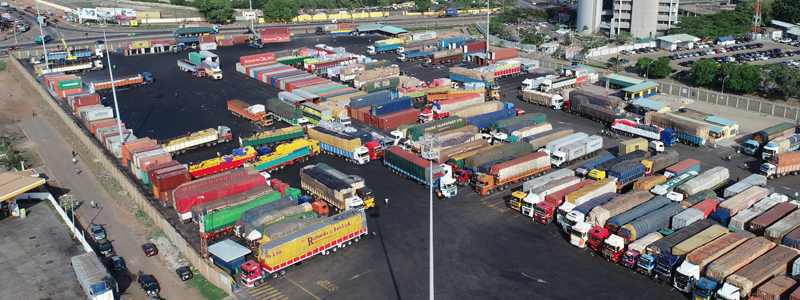
Ghana’s Tema Port, for instance, has dedicated facilities that support vehicle and container handling. GPHA’s Golden Jubilee Terminal, for example, is an inland clearance depot at Tema Port that includes a car park and facilities for receiving and delivering imported vehicles in containers.